Environment & Energy
Related: About this forum
2025 Was UK's Driest Spring For 100 Years, But That Didn't Prevent 300,000 Raw Sewage "Storm Overflows" From Water Firms
Raw sewage was discharged into rivers and seas almost 300,000 times last year after the driest spring for more than 100 years and the sunniest and warmest year on record in England. Water companies released raw sewage into rivers and seas from storm overflows – designed to be used in extreme wet weather conditions – 291,492 times. This was a 35% reduction on record spills in 2024. Average discharges were 20.5 spills for each overflow, compared with 31.8 in the previous year. The duration of raw sewage discharges into waterways fell by more than half, to 1.8m hours, from a high of almost 4m hours in 2024. Some water companies had reductions of more than 60% and 70% compared with the previous year, according to figures released on Thursday by the Environment Agency (EA).
Despite drought conditions across the country, raw sewage was discharged for almost 1m hours more than in 2018, pointing to the impact of the failure to invest in infrastructure over the long term, campaigners said.Raw sewage discharges through storm overflows should happen only in extraordinary conditions, such as very heavy rainfall or storms. In 2025, parts of England were hit by drought for several months and four water companies imposed hosepipe bans.
Richard Benwell, the chief executive of Wildlife and Countryside Link, an umbrella group of 66 environmental charities, said that despite the dry weather, raw sewage was still discharged almost 300,000 times.“When sewage is pouring out even in a dry year, you really know the system is broken,” Benwell said. “These aren’t stormwater overflows; they’re all-weather waste pipes. Rivers, lakes and seas should not be pressure valves for pollution. Any sewage in our waters is too much."
EDIT
South West Water, with 860 miles (1,380km) of coastline, discharged raw sewage for the longest period, 407,000 hours, in 2025, followed by United Utilities (327,000 hours) and Yorkshire Water (285,000 hours). Thames Water, which has been on the brink of collapse for more than two years as it struggles under the weight of £17.6bn in debt, discharged raw sewage for 107,000 hours.
EDIT/END
https://www.theguardian.com/environment/2026/mar/26/sewage-released-into-englands-rivers-and-seas-nearly-300000-times-last-year
 = new reply since forum marked as read
Highlight:
NoneDon't highlight anything
5 newestHighlight 5 most recent replies
= new reply since forum marked as read
Highlight:
NoneDon't highlight anything
5 newestHighlight 5 most recent replies

Vogon_Glory
(10,292 posts)A meme that privateers taking over state-owned agencies have taken to heart far, far too often. The privateers who’ve taken over state-owned infrastructure in Britain, the Russian Federation and in the Americas are quite happy to enrich themselves at the expense of maintenance and upgrades. Milton Freidman’s belief that the private sector will always run things better than state-owned entities seems profoundly misplaced.
I do not consider myself a socialist, but I do believe that any private entity taking over former state-owned infrastructure ought to have moral and legal obligations to keep things in good repair.
EDIT: Clearly that is not happening with Britain’s sewage systems.
Maybe “sewer socialism” (a term once used in American political parlance) isn’t such a bad thing after all. 

OKIsItJustMe
(21,875 posts)“Combined Sewers” are relatively common compared to younger states. The capacity of the sewers are exceeded, during heavy, or long duration rains. Weather patterns are changing, we are getting fewer, but more intense rain storms. In addition, as more of the surface is paved, preventing the ground from absorbing rains, leading to even more rain water winding up in the sewers. This all leads to "Combined Sewer Overflows” (or CSO’s.)
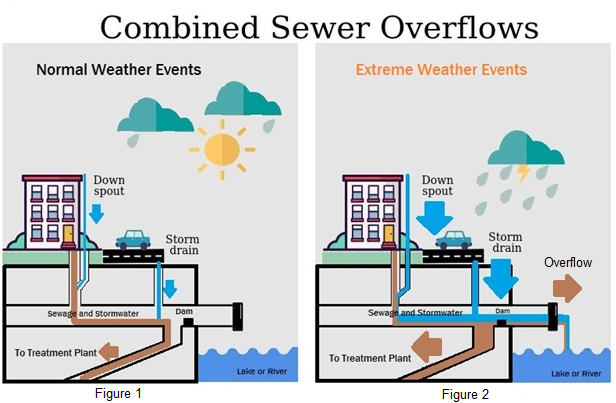
It does not surprise me that the UK, a country older than New York State. That although the total amount of rain in the year is less, individual storms are more intense, leading to CSO’s there as well.

IbogaProject
(5,883 posts)Both the one in London and the one in NYC date to the early 19th century.