Seattle Is Building Light Rail Like It's 1999
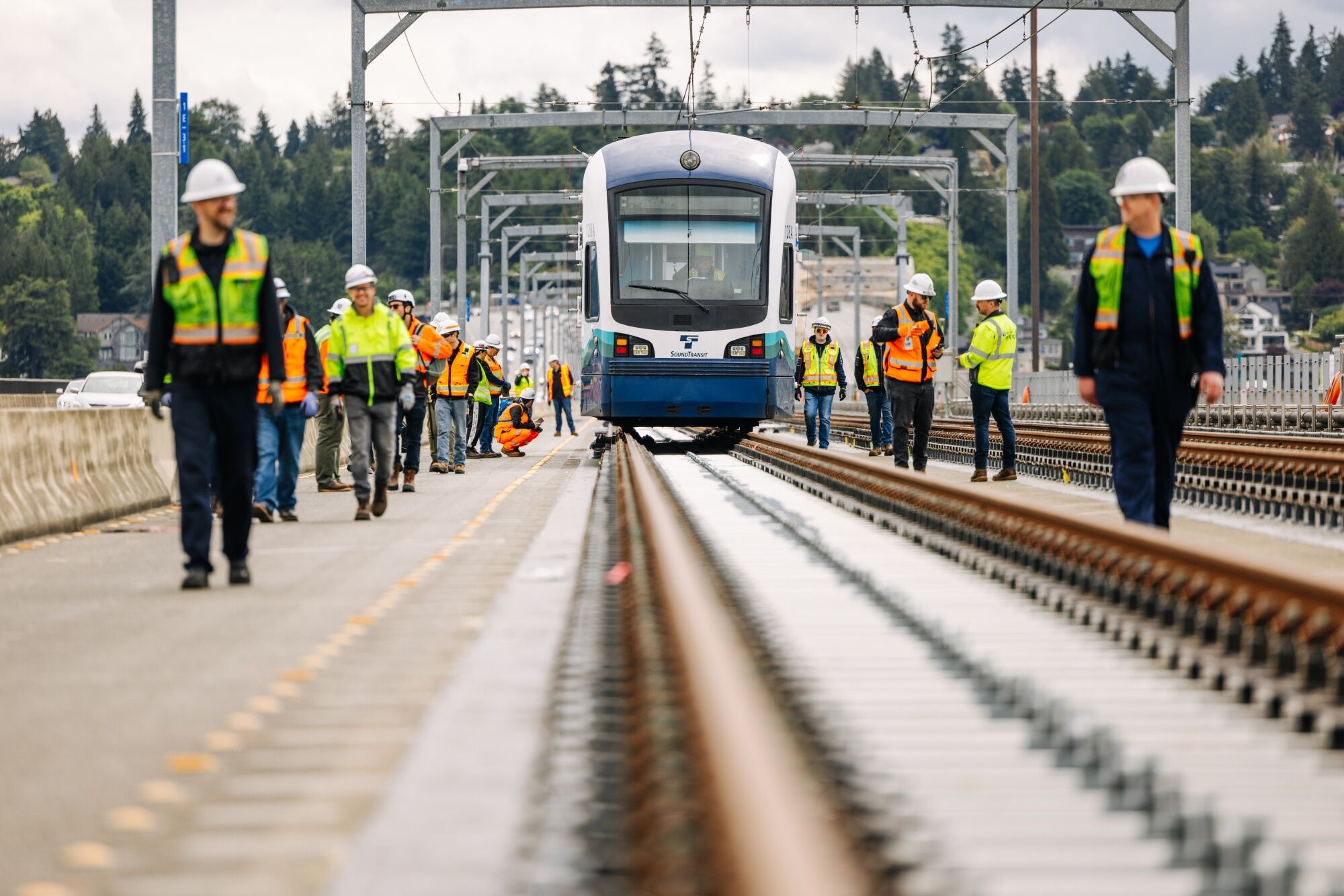
It’s not easy to run a train across a floating bridge. To extend light rail service across the mile-long stretch of Lake Washington that separates downtown Seattle from Mercer Island, engineers converted two lanes of the existing I-90 span to carry four-car electrified trains. That demanded a host of technical innovations, including a system of curved and rotating track supports that allow trains to adapt to the shifting movements of the bridge as it is buffeted by wind and waves.
According to regional transit agency Sound Transit, which operates the metro area’s Link system, it’s the first light rail in the world built on a floating bridge.
“If you go over a bump in a car, you’re OK,” says Ryan Avery, deputy director of the Washington State Transportation Center at the University of Washington, explaining the painstaking construction process. “But with a train, a bump is a derailment.” Another innovation is a unique “cathodic protection” system that is supposed to capture stray electrical currents before they enter the structure, slowing corrosion of the rebar inside the massive floating concrete pontoons that support the bridge deck.
Since September, test trains have been chugging back and forth across the bridge, prepping for regular service this spring. The so-called Crosslake Connection is just one particularly complex part of Sound Transit’s latest expansion: the 2 Line, a 14-mile, $3.7 billion effort to connect the city with the suburbs of Redmond and Bellevue. Voters approved the Link extension back in 2008; it was originally slated to open in 2020. According to Josh Brown of the Puget Sound Regional Council, a regional planning agency, the project is critical to relieve traffic congestion and help the area meet its economic development goals.
https://www.bloomberg.com/news/features/2026-01-16/seattle-s-sound-transit-light-rail-is-drawing-riders-and-criticism

 = new reply since forum marked as read
