Welcome to DU!
The truly grassroots left-of-center political community where regular people, not algorithms, drive the discussions and set the standards.
Join the community:
Create a free account
Support DU (and get rid of ads!):
Become a Star Member
Latest Breaking News
Editorials & Other Articles
General Discussion
The DU Lounge
All Forums
Issue Forums
Culture Forums
Alliance Forums
Region Forums
Support Forums
Help & Search
Science
Related: About this forumWhy You Hate Eating Bugs: DNA Reveals a 9,000-Year-Old Legacy
https://scitechdaily.com/why-you-hate-eating-bugs-dna-reveals-a-9000-year-old-legacy/By Spanish National Research Council (CSIC)
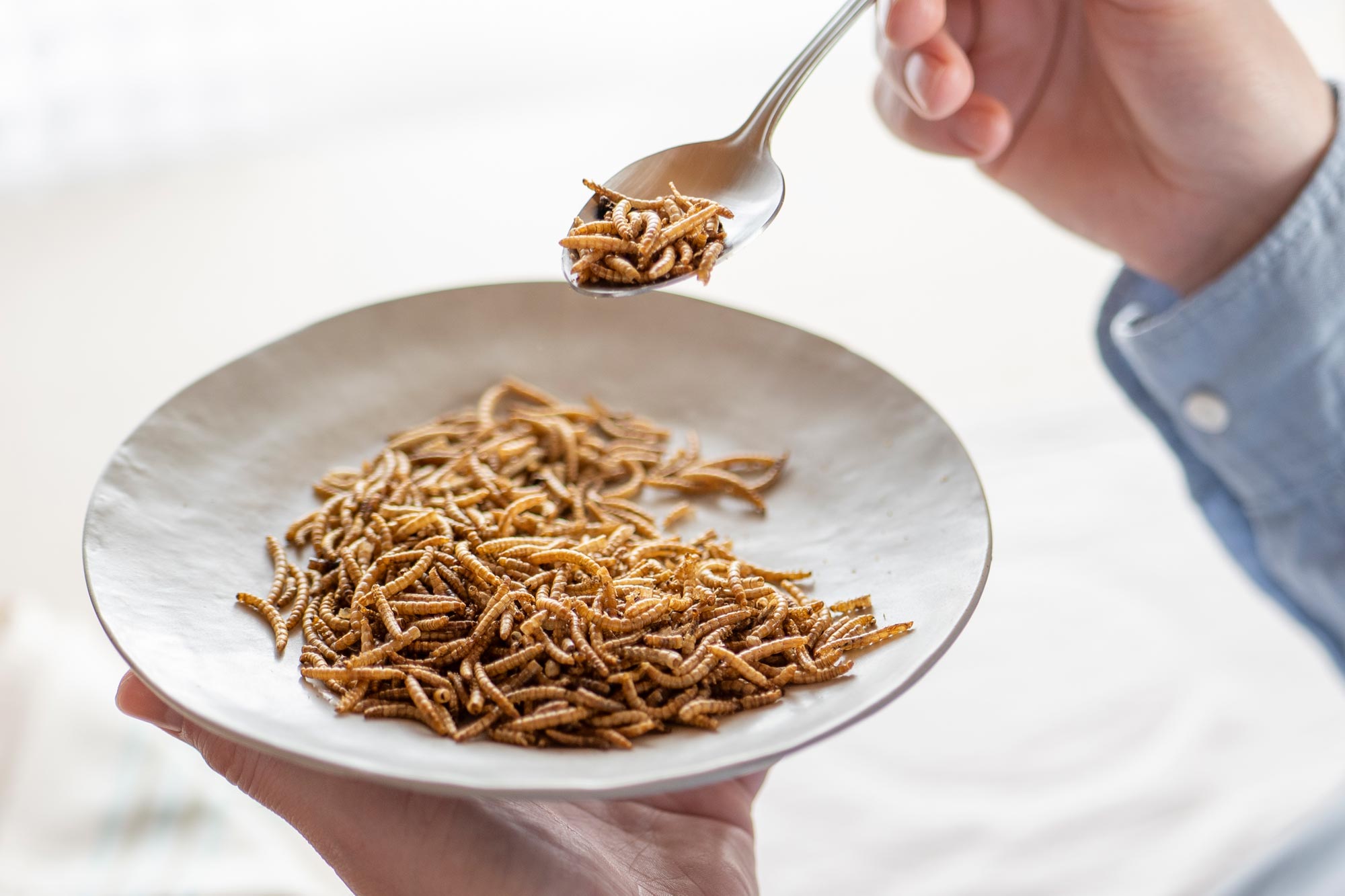
Genomic evidence from ancient dental calculus suggests that insect consumption followed sharply different patterns across Eurasia, shaped by ecology as much as culture. Credit: Shutterstock
Ancient DNA indicates that humans' ability and willingness to eat insects may have depended strongly on geography.
I was gifted with an entomologist sister who enjoyed bringing us 'interesting' food to enjoy at family dinners.
Eating insects is normal in many parts of the world, but in much of Europe and North America, the idea still triggers disgust. That reaction is often treated as purely cultural, yet a new study suggests the story may go deeper, reaching back through ecology, genetics, and ancient diets.
As population growth, climate change, environmental strain, and current food production systems push scientists to look for alternative sources of nutrition, insects have drawn increasing attention. There are 1,611 insect species listed as edible, and organizations such as the Food and Agriculture Organization of the United Nations (FAO) have promoted insects as a sustainable food source. Hundreds of millions of people already eat them. Still, Western societies remain broadly resistant to entomophagy, the practice of eating insects.
To investigate where that resistance may come from, researchers at the Institute of Evolutionary Biology (IBE), a joint center of the Spanish National Research Council (CSIC) and Pompeu Fabra University (UPF), used genomic analyses to trace insect consumption across thousands of years. The study, published in Science Advances, suggests that insect eating was rare and mostly accidental in Europe, Central Asia, and East Asia, while it was probably more common in tropical regions and among Neanderthals. The results connect modern food preferences with a much longer history of human evolution and ecology.
Genomic analysis reconstructs the history of entomophagy in Eurasia
The IBE team searched for signs of insect consumption in 745 samples of dental calculus (tartar) from anatomically modern humans, with some samples dating back as far as 33,000 years. Dental calculus can preserve DNA traces from species that were regularly part of a person's diet, making it a useful archive of ancient eating habits.
. . .
As population growth, climate change, environmental strain, and current food production systems push scientists to look for alternative sources of nutrition, insects have drawn increasing attention. There are 1,611 insect species listed as edible, and organizations such as the Food and Agriculture Organization of the United Nations (FAO) have promoted insects as a sustainable food source. Hundreds of millions of people already eat them. Still, Western societies remain broadly resistant to entomophagy, the practice of eating insects.
To investigate where that resistance may come from, researchers at the Institute of Evolutionary Biology (IBE), a joint center of the Spanish National Research Council (CSIC) and Pompeu Fabra University (UPF), used genomic analyses to trace insect consumption across thousands of years. The study, published in Science Advances, suggests that insect eating was rare and mostly accidental in Europe, Central Asia, and East Asia, while it was probably more common in tropical regions and among Neanderthals. The results connect modern food preferences with a much longer history of human evolution and ecology.
Genomic analysis reconstructs the history of entomophagy in Eurasia
The IBE team searched for signs of insect consumption in 745 samples of dental calculus (tartar) from anatomically modern humans, with some samples dating back as far as 33,000 years. Dental calculus can preserve DNA traces from species that were regularly part of a person's diet, making it a useful archive of ancient eating habits.
. . .
2 replies
 = new reply since forum marked as read
Highlight:
NoneDon't highlight anything
5 newestHighlight 5 most recent replies
= new reply since forum marked as read
Highlight:
NoneDon't highlight anything
5 newestHighlight 5 most recent replies
= new reply since forum marked as read
Highlight:
NoneDon't highlight anything
5 newestHighlight 5 most recent replies
Why You Hate Eating Bugs: DNA Reveals a 9,000-Year-Old Legacy (Original Post)
erronis
Yesterday
OP

Javaman
(66,058 posts)1. I have eaten bugs, meal worms aka maggots and would do it again
they had a nutty buttery flavor.

Warpy
(114,813 posts)2. Fried grasshopper aint half bad
and I'd describe it as nutty, also. Pro tip: remove as much of the bu Agriculture provided reliable food year round. Bugs threatened that, so they became despised and disgusting.g's feet, wings, and exoskeleton as possible, chitin stuck in your teeth is really hard to dislodge.
What happened to turn bugs and grubs from a tasty snack to disgusting is agriculture. Kids with slingshots could take care of the birds and bunnies and even deer, chasing them off and providing dinner if they were good shots. Bugs were problematic, nesting birds the only real control available at the time of early agriculture. It's no wonder they became despised and disgusting.