Welcome to DU!
The truly grassroots left-of-center political community where regular people, not algorithms, drive the discussions and set the standards.
Join the community:
Create a free account
Support DU (and get rid of ads!):
Become a Star Member
Latest Breaking News
Editorials & Other Articles
General Discussion
The DU Lounge
All Forums
Issue Forums
Culture Forums
Alliance Forums
Region Forums
Support Forums
Help & Search
General Discussion
In reply to the discussion: Who Knew a New York City Slumlord Would Become History's Greatest Secret Agent? [View all]
Kid Berwyn
(24,094 posts)5. There MUST be an explanation. Cough Mafiya.
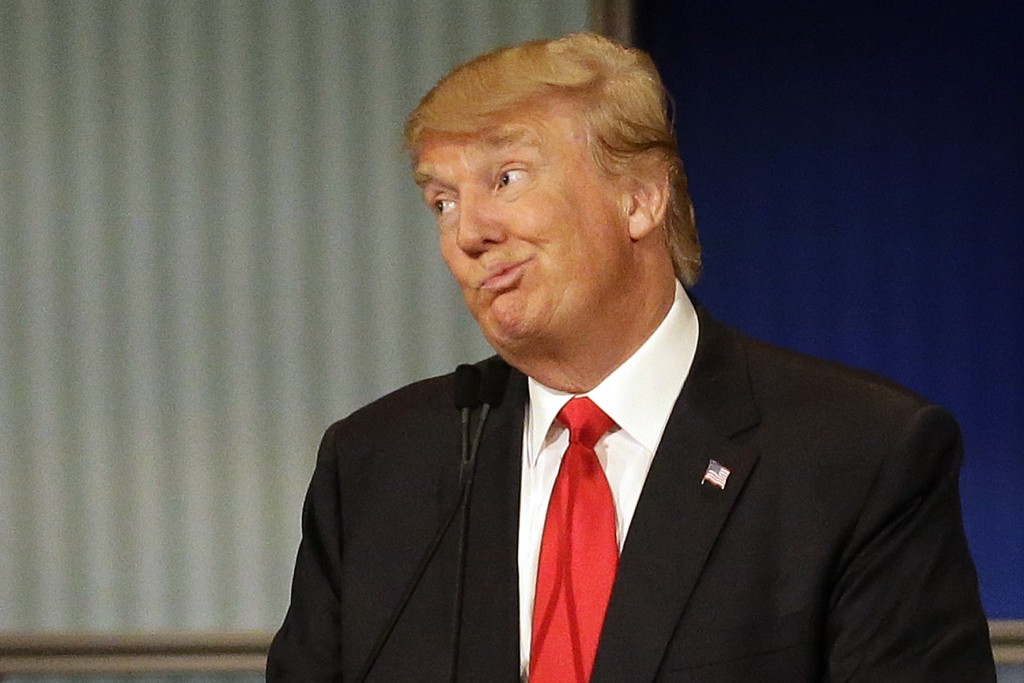
How Russian Money Helped Save Trump’s Business
After his financial disasters two decades ago, no U.S. bank would touch him.
Then foreign money began flowing in.
by Mike Herschel
DECEMBER 21, 2018, 1:31 PM
In the fall of 1992, after he cut a deal with U.S. banks to work off nearly a billion dollars in personal debt, Donald Trump put on a big gala for himself in Atlantic City to announce his comeback. Party guests were given sticks with a picture of Trump’s face glued to them so they could be photographed posing as the famous real-estate mogul. As the theme music from the movie Rocky filled the room, an emcee shouted, “Let’s hear it for the king!” and Trump, wearing red boxing gloves and a robe, burst through a paper screen. One of his casino executives announced that his boss had returned as a “winner,” according to Trump biographer Michael D’Antonio.
But it was mainly an act, D’Antonio told Foreign Policy. In truth Trump was all but finished as a major real-estate developer, in the eyes of many in the business, and that’s because the U.S. banking industry was pretty much finished with him. By the early 1990s he had burned through his portion of his father Fred’s fortune with a series of reckless business decisions. Two of his businesses had declared bankruptcy, the Trump Taj Mahal Casino in Atlantic City and the Plaza Hotel in New York, and the money pit that was the Trump Shuttle went out of business in 1992. Trump companies would ultimately declare Chapter 11 bankruptcy two more times. When would-be borrowers repeatedly file for protection from their creditors, they become poison to most major lenders and, according to financial experts interviewed for this story, such was Trump’s reputation in the U.S. financial industry at that juncture.
For the rest of the ’90s a chastened Trump launched little in the way of major new business ventures (with a few exceptions, such as the Trump World Tower across from the United Nations, which began construction in 1999 and was financed by two German lenders, Deutsche Bank and Bayerische Hypo- und Vereinsbank). “He took about 10 years off, and really sort of licked his wounds and tried to recover,” D’Antonio said. As late as 2003, Trump was in such desperate financial trouble that at a meeting with his siblings following his father’s death he pressed them to hurriedly sell his father’s estate off, against the late Fred Trump’s wishes, the New York Times reported in an investigation of Trump family finances in October. And his businesses kept failing: In 2004, Trump Hotels and Casino Resorts filed for bankruptcy with $1.8 billion dollars of debt.
Snip…
Trump’s former longtime architect, Alan Lapidus, echoed this view in an interview with FP this month. Lapidus said that based on what he knew from the internal workings of the organization, in the aftermath of Trump’s earlier financial troubles “he could not get anybody in the United States to lend him anything. It was all coming out of Russia. His involvement with Russia was deeper than he’s acknowledged.”
Snip…
According to Trump’s former real-estate partner and other sources who are familiar with the internal workings of the Trump Organization, his post-’90s revival may have really begun in the early 2000s with the Bayrock Group, which rented offices two floors down from Trump’s in Trump Tower. Bayrock was run by two investors who would help to change Trump’s trajectory: Tevfik Arif, a Kazakhstan-born former Soviet official who drew on seemingly bottomless sources of money from the former Soviet republic; and Felix Sater, a Russian-born businessman who had pleaded guilty in the 1990s to a huge stock-fraud scheme involving the Russian mafia.
Continues…
https://foreignpolicy.com/2018/12/21/how-russian-money-helped-save-trumps-business/
Edit history
Please sign in to view edit histories.
Recommendations
2 members have recommended this reply (displayed in chronological order):
14 replies
 = new reply since forum marked as read
Highlight:
NoneDon't highlight anything
5 newestHighlight 5 most recent replies
RecommendedHighlight replies with 5 or more recommendations
= new reply since forum marked as read
Highlight:
NoneDon't highlight anything
5 newestHighlight 5 most recent replies
RecommendedHighlight replies with 5 or more recommendations
= new reply since forum marked as read
Highlight:
NoneDon't highlight anything
5 newestHighlight 5 most recent replies
RecommendedHighlight replies with 5 or more recommendations
Who Knew a New York City Slumlord Would Become History's Greatest Secret Agent? [View all]
Kid Berwyn
15 hrs ago
OP
it pisses me off that so little is made of the fact that the nra was funded by russia.
mopinko
14 hrs ago
#1
He wasn't a secret agent for us. He was a traitor. His family wasn't loyal to his home country either.
ChicagoTeamster
12 hrs ago
#13